
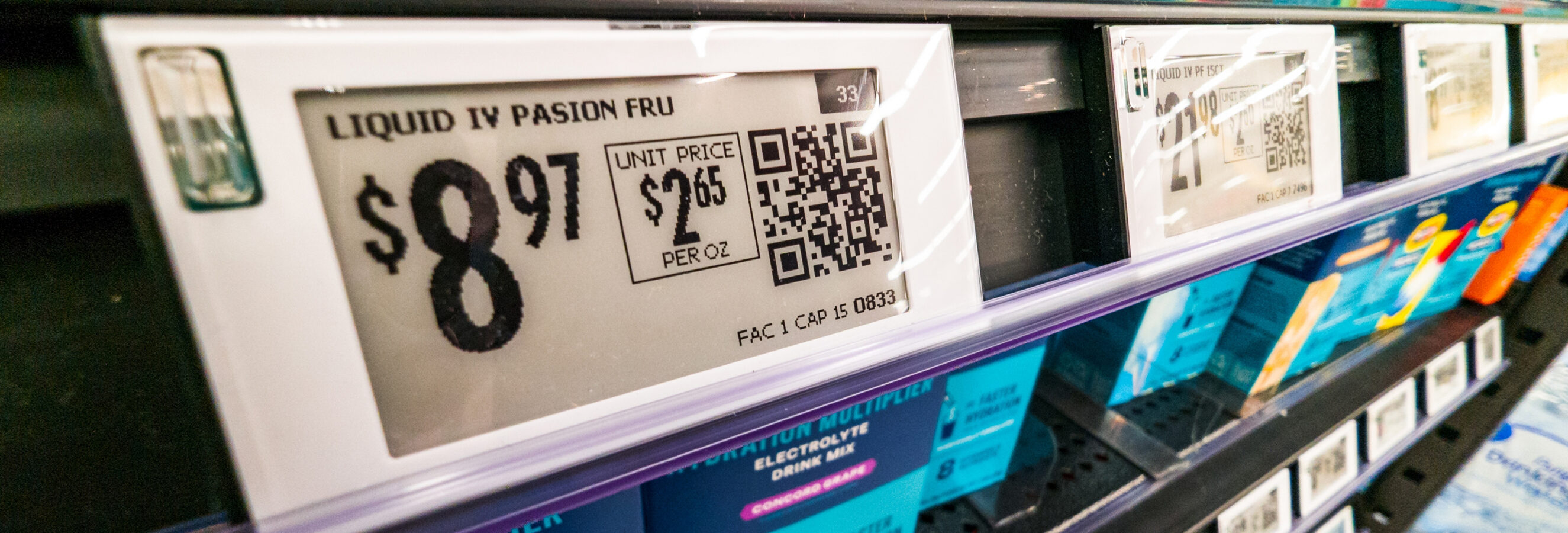
Retailers have spent the last decade investing heavily in digital transformation, from e-commerce platforms to AI-powered personalization. But one of the most visible and rapidly evolving innovations is happening directly on the store shelf: digital shelf labels (DSLs), also known as electronic shelf labels (ESLs).
These small digital displays are replacing traditional paper price tags in grocery stores, pharmacies, electronics retailers, and big-box chains around the world. While the technology may appear simple on the surface, digital shelf labels are reshaping how retailers manage pricing, promotions, operations, and shopper engagement.
For brands and retailers alike, the rise of digital shelf labels raises important questions: How do shoppers react to them? Do they improve the shopping experience? And what impact do they have on purchase behavior?
What Are Digital Shelf Labels?
Digital shelf labels are electronic displays attached to store shelves that show pricing, product information, promotions, and sometimes QR codes or inventory status. They are centrally controlled and updated in real time through wireless networks.
Unlike traditional paper labels that require manual replacement, DSLs allow retailers to instantly change pricing across entire stores or regions.
This flexibility creates several operational advantages:
- Faster implementation of promotions
- Improved pricing accuracy
- Reduced labor costs
- Easier inventory management
- Better synchronization between online and in-store pricing
For large retailers managing thousands of SKUs, the efficiency gains can be substantial.
Why Retailers Are Investing in DSL Technology
The retail environment has become increasingly dynamic. Prices fluctuate more frequently due to inflation, supply chain pressures, competitive pricing, and personalized promotions.
Traditional paper tags struggle to keep up.
Digital shelf labels allow retailers to react quickly to market conditions while creating a more agile store environment. Grocery retailers, for example, can update prices instantly for daily promotions or markdowns. Electronics retailers can synchronize prices with online competitors. Pharmacies can reduce pricing errors and improve compliance.
Beyond operational efficiency, DSLs also support broader omnichannel strategies. As consumers increasingly expect seamless experiences between digital and physical shopping, retailers are looking for ways to make stores more connected, responsive, and data-driven.
The Shopper Experience Matters
While retailers often focus on operational benefits, the shopper experience ultimately determines whether new technologies succeed.
Consumers are already accustomed to digital interactions online. In-store, however, expectations can be different. Some shoppers may appreciate the convenience and modern appearance of digital labels, while others may view them as confusing, impersonal, or overly dynamic.
Key shopper questions include:
- Are prices easy to read?
- Do shoppers trust rapidly changing prices?
- Do digital displays improve navigation and decision-making?
- How noticeable are promotions on digital labels?
- Do shoppers perceive the technology as helpful or intrusive?
These questions are especially important because shelf communication plays a critical role in influencing purchase decisions. Packaging, pricing, promotions, and shelf visibility all interact in the moment of choice.
If digital shelf labels alter how shoppers process information, retailers and brands need to understand the impact.
Opportunities for Brands
Digital shelf labels are not just a retailer tool. They also create new opportunities for brands to influence shoppers at the shelf.
In the future, DSLs may support:
- Dynamic promotional messaging
- Personalized offers
- Sustainability information
- Product ratings and reviews
- QR-enabled product education
- Real-time cross-selling suggestions
For brands competing in crowded categories, the shelf edge could become a much more interactive and strategic communication channel.
However, greater flexibility also introduces new complexity. If promotions can change instantly, brands may need to rethink how they plan campaigns, measure effectiveness, and optimize shelf visibility.
Understanding how shoppers engage with these new touchpoints will become increasingly important.
Potential Shopper Concerns
Despite the benefits, digital shelf labels also introduce potential risks.
Some consumers may worry about dynamic pricing practices, particularly if prices appear to change frequently throughout the day. Others may feel overwhelmed by additional digital stimuli in already busy retail environments.
There is also the risk of “digital clutter.” If every shelf edge becomes animated or overloaded with messaging, shoppers may begin tuning out important information altogether.
Retailers will need to strike the right balance between innovation and simplicity.
The most successful implementations are likely to be those that enhance clarity and convenience rather than adding friction or distraction.
Why Shopper Research Is Critical
As digital shelf label adoption accelerates, retailers and brands need evidence-based insights into how shoppers perceive and respond to the technology.
That means going beyond assumptions.
Research can help answer critical business questions such as:
- Do digital shelf labels improve shopper engagement?
- Which messaging formats drive the strongest response?
- How do DSLs influence price perception and trust?
- What types of promotions stand out most effectively?
- How do different shopper segments react?
- Does the technology impact conversion or basket size?
Methods such as in-store intercepts, shop-alongs, eye-tracking, mobile ethnography, and behavioral testing can uncover how shoppers truly interact with digital shelf environments.
The answers may vary significantly by category, retailer format, and shopper demographic.
The Future of the Shelf
The physical store remains one of the most influential environments in the shopper journey. Even as e-commerce grows, the shelf continues to play a powerful role in driving discovery, trial, and purchase decisions.
Digital shelf labels represent another step toward a more connected and data-driven retail ecosystem. But technology alone does not guarantee better shopper experiences.
The retailers and brands that succeed will be those that understand how innovation affects real shopper behavior — and adapt accordingly.
At Explorer Research, we help retailers and brands understand shopper behavior in evolving retail environments. From in-store decision-making to packaging, pricing, and promotional effectiveness, our research uncovers the insights needed to make smarter business decisions.
If your organization is exploring digital shelf labels or evaluating their impact on shopper experience, we’d love to help.
Contact us to learn how shopper insights can guide your retail innovation strategy.